Project Chicxulub II: A Scientific Blueprint for Surviving the Dinosaur-Killer
The asteroid that struck the Yucatán Peninsula 66 million years ago did more than kill the dinosaurs; it reset the Earth’s biological clock. Today, humanity faces a profound question: with our current and near-future technology, could we survive a “Repeat Event”? The answer is no longer a simple “No”—it is a complex “Yes, but only as a different kind of civilization.” This article explores the physics of the impact, the biological hurdles of the aftermath, and the radical engineering required to build an asteroid-proof future.
1. The Physics of Annihilation: Revisiting the 66 MYA Impact
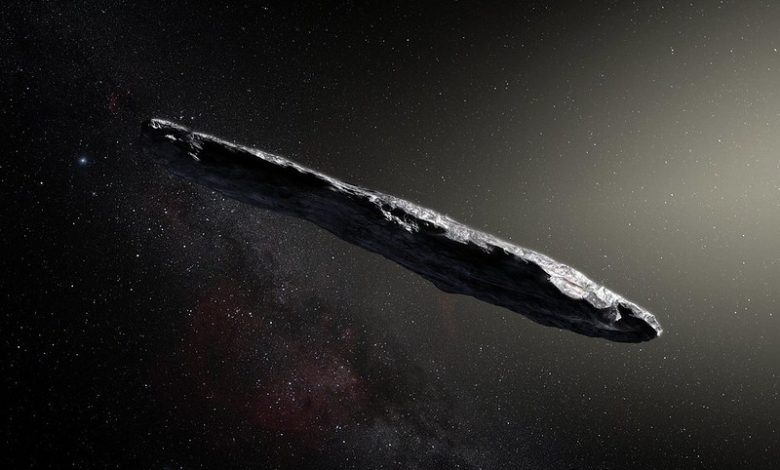
To survive the enemy, we must first understand its power. The Chicxulub asteroid was roughly 10–15 km in diameter, traveling at 20 kilometers per second (45,000 mph).
The Kinetic Energy: The impact released approximately 100 million megatons of energy. For context, this is 10 billion times the power of the Hiroshima bomb.
The Heat Pulse: Within seconds, the impact ejected vaporized rock into the upper atmosphere. As this material fell back to Earth, it acted like a global toaster, heating the atmosphere to several hundred degrees Celsius and igniting every forest on the planet.
The Mega-Tsunami: Displacement of the Gulf of Mexico sent a wall of water over 1,500 meters high (initially) that scoured the coastlines of every continent.
2. Biological Barriers: Why Humans Are Vulnerable
In the fossil record, the survivors of Chicxulub were mostly animals weighing less than 25 kg. Humans, as large, high-metabolism mammals, fail every natural survival metric.
The best way to survive an asteroid is to ensure it never hits. By 2026, humanity has moved from “tracking” to “active defense.”
A. Kinetic Impactors (DART Legacy)
NASA’s DART mission proved we can change an asteroid’s trajectory. However, for a 10km “Planet-Killer,” a single DART is like a fly hitting a freight train. We would need a fleet of hundreds of automated impactors launched years in advance to nudge the rock by just a fraction of a degree.
B. The Nuclear Option (Stand-off Detonation)
For large threats, kinetic energy isn’t enough. The most viable 2026 strategy is a stand-off nuclear blast. By detonating a nuclear device several hundred meters from the asteroid’s surface, the X-rays vaporize the rock’s exterior, creating a “jet effect” that pushes the asteroid into a new orbit.
4. Engineering the Deep: The Asteroid-Proof City
If deflection fails, humanity’s only hope is to move into the Lithosphere. An asteroid-proof city is not a “bunker”; it is a self-contained ecosystem built 500 meters below the surface.
A. Structural Shock Absorption
The impact triggers Magnitude 11-12 earthquakes. Standard architecture would crumble.
Seismic Isolation: Entire city sectors must be mounted on giant friction pendulum bearings and fluid viscous dampers, similar to those used in Tokyo’s skyscrapers but on a massive scale.
Graphene-Infused Concrete: This “Smart Concrete” provides the tensile strength of steel with the compressive strength of rock, allowing for massive caverns that won’t collapse under planetary tremors.
B. Radiation and Thermal Shielding
The surface will remain at 500°C for days and then drop to -20°C for years. The Solution: Multi-layered vacuum-sealed bulkheads and boron-polyethylene shields to block the secondary radiation and cosmic rays that would penetrate the thinning atmosphere after the impact.
5. Closed-Loop Life Support: Food and Energy
Without the sun, the surface food chain dies. The underground city must be a “Closed Ecological Life Support System” (CELSS).
A. The Energy Problem: Fission and Geothermal
Solar and wind power are useless in a “Nuclear Winter.”
SMRs (Small Modular Reactors): These nuclear units provide 300MW of power and can run for 60 years without refueling.
Geothermal Deep-Drilling: By drilling 10km down, we tap into the Earth’s internal heat, providing infinite thermal energy regardless of surface conditions.
B. The Food Problem: Vertical Farms and Lab-Meat
Traditional farming is replaced by hydroponics and aeroponics powered by specialized LED arrays that mimic the solar spectrum.
Cellular Agriculture: Bioreactors produce lab-grown protein (meat) from stem cells, requiring 99% less land and 90% less water than livestock.
Algae Bioreactors: Spirulina and other algae serve as “oxygen scrubbers” while providing a nutrient-dense food base.
6. The Multi-Planetary Pivot: The Ultimate Insurance
As long as humanity is on one planet, we are one bad day away from extinction. The Chicxulub-sized threat is the primary driver for Lunar and Martian colonization.
The Moon: Lava tubes on the Moon provide natural 100-meter thick shielding against any space-borne threat. A Lunar colony acts as a “Data Vault” and “Genetic Bank.”
Mars: If Earth’s atmosphere becomes toxic for 1,000 years, a self-sustaining Mars colony ensures the human consciousness continues elsewhere.
7. Survival Probability Analysis
Scenario
Warning Time
Est. Survival Rate
Global Outcome
Surprise Impact
< 6 Months
0.01%
Societal Collapse
Prepped Survival
2 Years
5.0%
Bunker-Based Civilization
Active Deflection
10 Years
99.9%
Normalcy Retained
Conclusion: The Great Filter
The asteroid that killed the dinosaurs was a “Great Filter”—a test that 75% of species failed. For the first time in 4 billion years, a species has the tools to pass that test. Surviving Chicxulub isn’t about hope; it’s about redundancy. Redundancy in energy, redundancy in food, and redundancy in planets. Our survival depends on our ability to turn our planet—and our neighboring worlds—into a network of indestructible, interconnected habitats.
Tech Gurug is a leading Technology Journal. Our Expert Mr Nishant Patar have decade of experience in Tech World. He and other experts are sharing their knowledge here. Also, see our Youtube Channel Tech Gurug and Yatra Gurug. Comment Guidelines : Genuine Name, No Links in comment, No Flooding Comments and Genuine Comment or your comment will be deleted or get ban from this site.