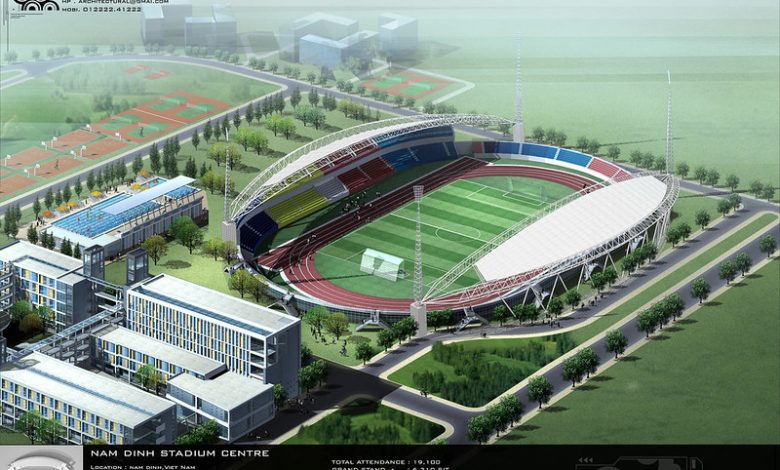
The Global Stadium Economy 2026: Engineering, Economics, and the Multi-Sport Evolution
In 2026, the global stadium industry has transitioned from “concrete giants” to high-tech, living machines. As we approach the massive sporting events of this decade, the conversation has shifted from how we build these venues to how we keep them from becoming financial burdens. The modern stadium is an architectural paradox: it must be a fortress of steel and concrete, yet as flexible as a theater stage, and as profitable as a 365-day business hub.
1. The Financial Ledger: Why Maintenance is a Billion-Dollar Industry
Maintaining a modern stadium is exponentially more expensive than previous generations of arenas. In 2026, the global stadium maintenance market is projected to reach a value of $16.21 billion. For a Tier-1 stadium, routine maintenance costs typically range from 2% to 5% of the total construction cost annually.
A. The Operational Expenditure (OpEx) Breakdown
For a venue like SoFi Stadium, which had an adjusted construction cost of nearly $6 billion, the annual overhead is a staggering $50M – $80M. This is not just for cleaning seats; it involves highly specialized engineering teams.
A major stadium during a sold-out match consumes as much electricity as a town of 15,000 people. Electric bills can reach $6M annually just for climate control and lighting. To combat this, stadiums are increasingly installing Battery Energy Storage Systems (BESS). These systems store renewable energy during the week and “shave the peak” during games, preventing massive utility surcharges.
2. Geometry & Engineering: The Multi-Sport Challenge
The modern era demands that a single stadium host the Olympics, Cricket, and Football—three sports with fundamentally incompatible field requirements. This is where “Kinetic Architecture” becomes essential.
A. The Rectangle vs. The Oval
A football pitch is a compact rectangle, while an athletics track is a 400m oval, and cricket requires a massive circle. Building a stadium for one usually ruins the viewing experience for the other. The Solution: Automated retractable seating. In venues like the London Stadium, the lower bowl can slide forward over the athletics track, bringing fans 15-20 meters closer to the football action, effectively changing the stadium’s DNA in under 48 hours.
B. Modular Field Technology
We no longer simply “mow” the grass; we swap the ground.
Retractable Trays: At Tottenham Hotspur Stadium, the natural grass is split into three longitudinal trays that slide into a storage chamber, revealing a synthetic NFL field underneath.
The Hovering Pitch: Japan’s Sapporo Dome uses a pneumatic air-cushion system to lift an 8,300-tonne grass field and float it outside the stadium building so it can grow in natural sunlight between matches.
“The air-cushion system reduces the friction of 8,300 tonnes to nearly zero, allowing a few dozen drive wheels to move a mountain of earth and grass with millimeter precision.”
3. Revenue Architecture: Turning “Empty Days” into Dollars
A stadium used 25 days a year is a financial failure. The 2026 business model focuses on 365-day monetization.
A. The Naming Rights Gold Mine
Naming rights are the most stable form of income. A 20-year deal like SoFi’s $625 million agreement provides a predictable $31M+ annually, which often covers the entire baseline maintenance budget before a single ticket is sold. Similarly, Narendra Modi Stadium leverages massive sponsorship deals with conglomerates like Adani and Reliance.
B. Luxury and the “Suite” Economy
While general admission tickets pay for operations, Luxury Suites provide the profit. A single suite in a premier stadium can cost $100,000 to $500,000 per year. In modern designs, these suites are used during the week as corporate boardrooms or high-end co-working spaces, ensuring they generate revenue even when no game is scheduled.
4. Green ROI: The Sustainability Shift
“Green” design is no longer just for PR; it is a critical cost-saving strategy to reduce the massive OpEx described in Section 1.
Water Harvesting: Stadiums like the Narendra Modi Stadium in India use advanced rainwater harvesting to reuse millions of liters of water for field irrigation, reducing water bills by up to 40%.
Renewable Integration:Levi’s Stadium in the USA is powered by over 1,000 solar panels, generating enough electricity to offset the power used during home games.
Zero-Waste Initiatives:Mercedes-Benz Stadium achieved LEED Platinum status by implementing on-site recycling that redirects 90% of game-day waste away from landfills.
5. Global Benchmarks: Record-Breaking Stadiums & Costs
Building these “Swiss Army Knife” stadiums requires astronomical capital investment. Here is how the world’s most advanced venues compare in 2026.
Stadium
Primary Use
Capacity
Construction Cost (Approx)
SoFi Stadium
NFL / Multi-Use
70,000+
$5.5 Billion
Narendra Modi Stadium
Cricket / Multi-Use
132,000
$150 Million (High Efficiency)
Tottenham Hotspur
Football / NFL
62,850
$1.2 Billion
Wembley Stadium
Football / Multi-Use
90,000
$1.5 Billion (Adjusted)
6. The Future: AI and the “Digital Twin”
The next frontier is Predictive Maintenance. By 2026, stadiums are built with “Digital Twins”—3D virtual models embedded with thousands of IoT (Internet of Things) sensors. These sensors monitor the stress on steel beams, the moisture levels in the turf, and the efficiency of HVAC systems in real-time. Instead of waiting for a pipe to burst, AI predicts the failure weeks in advance, allowing for repairs that cost 80% less than emergency fixes.
Furthermore, LED Field Markings are being tested to replace traditional paint. This would allow a stadium to switch from a football layout to a cricket layout with the flick of a switch, illuminating the grass in different colors to guide players and referees.
Conclusion: The stadium of 2026 is an evolving ecosystem. While the cost of entry is in the billions, the integration of modular engineering, smart energy management, and year-round revenue streams ensures these venues remain the cathedrals of modern society. Whether hosting an Olympic final, a T20 cricket match, or a sold-out concert, the multi-use stadium is the only sustainable path forward for the megacities of the future.
Tech Gurug is a leading Technology Journal. Our Expert Mr Nishant Patar have decade of experience in Tech World. He and other experts are sharing their knowledge here. Also, see our Youtube Channel Tech Gurug and Yatra Gurug. Comment Guidelines : Genuine Name, No Links in comment, No Flooding Comments and Genuine Comment or your comment will be deleted or get ban from this site.